REVIEW · PARIS
From Paris: Versailles Full-Day Trip by Train
Book on GetYourGuide →Operated by Memories France · Bookable on GetYourGuide
Versailles hits harder with a plan. This full-day trip pairs skip-the-line palace entry with a guided route past the Hall of Mirrors, then shifts to Marie Antoinette’s Petit Trianon and gardens with a Petit Train shortcut. The trade-off is real: expect a lot of walking and a long day, especially in summer heat.
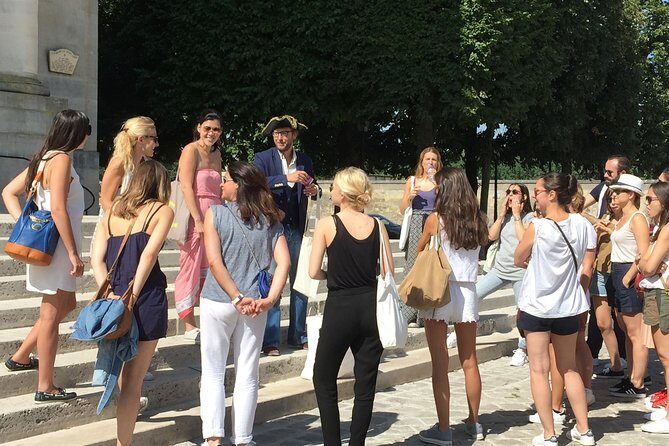
I also like that the day is structured for first-timers. You get a guide who keeps the story moving, with named guides like Claire, Christina, Karen, and Ed showing up in this format, plus headsets so you can actually hear the details when crowds swell.
One more thing to watch: the gardens and fountain timing depend on the season schedule, not your arrival time. If you’re going for fountains every hour, you’ll have to accept that Versailles runs on a set timetable.
In This Review
- Quick highlights before you commit
- Why a train day to Versailles beats DIY logistics
- Palace of Versailles: skip-the-line entry and a guided route that makes sense
- Getting the most out of the Hall of Mirrors and royal apartments
- Gardens, fountains, and musical shows: timing is everything
- Marie Antoinette’s Petit Trianon and the Normandy village
- Lunch planning at Versailles: use the break wisely
- The behind-the-scenes extras that make the day smoother
- Walking, heat, and comfort: how to prepare for a 9-hour commitment
- Price and value: what you’re paying for at $180 per person
- Should you book this Versailles full-day train tour?
- FAQ
- How long is the Versailles full-day trip from Paris?
- How do you get from Paris to Versailles?
- Is skip-the-line entry included?
- What parts of Versailles are included in the tour?
- Is lunch included?
- Are fountains and musical shows included?
- Does the tour include the Petit Train?
- Is the tour wheelchair accessible?
Quick highlights before you commit
- Skip-the-line access to the Palace of Versailles so you spend more time inside and less time queuing
- Hall of Mirrors plus royal apartments with guided context that makes the rooms easier to remember
- Gardens with musical and fountain schedules from late spring through October
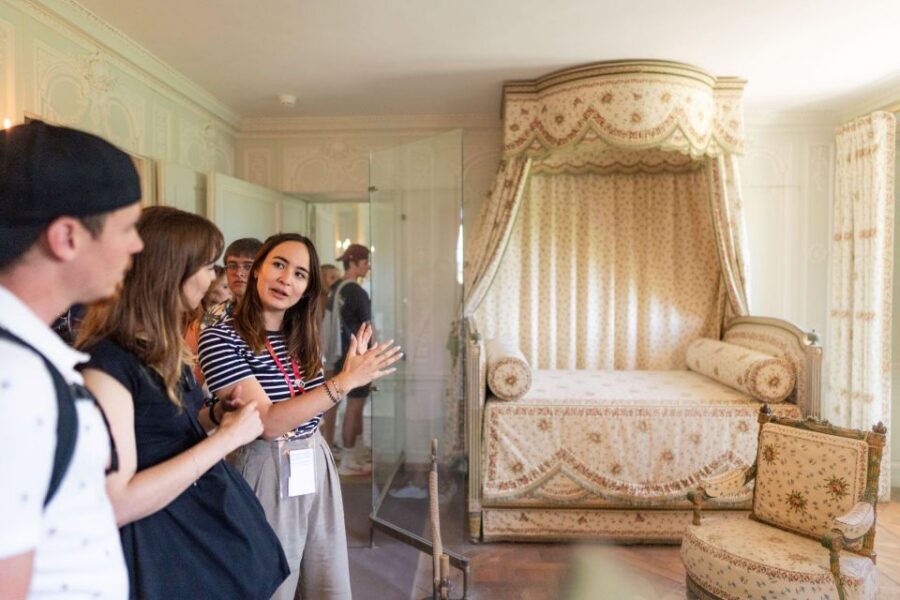
- Marie Antoinette’s Petit Trianon and the Normandy village with vineyard, dairy, and vegetable farm
- Petit Train ride to reduce walking between the Palace area and the Petit Trianon area
- Headsets when needed so your guide stays clear, even in busy rooms
Why a train day to Versailles beats DIY logistics
The best part of this trip is that it protects you from the usual Versailles headaches. You meet downtown Paris at a designated spot (one listed option is 5 Bd de Vaugirard, Le Régalia), then you ride an escorted train out to Versailles. The outbound train time is about 40 minutes, and you’re not left figuring out which line goes where.
This matters because Versailles isn’t just one attraction. It’s a palace, a huge garden system, and multiple ticket gates and routes. With the day built around an escorted rhythm—get on the train, arrive together, tour in guided blocks—you waste less energy on transit friction.
You also return by train in the same guided style, with a short walk to the station at the end of the day. One review noted an issue with the return metro/station that was outside the tour’s control, which is a reminder that public transit can always have problems. Still, the overall point stands: your day has rails, so you can spend your brain on what to see.
Other Paris-departure tours we've reviewed



Palace of Versailles: skip-the-line entry and a guided route that makes sense
Versailles can feel like a blur if you wander on your own. This tour gives you a route with actual meaning—rooms in a sequence that connects Louis XIV’s ambitions to what you’re seeing on the walls.
You start with a guided Palace tour of about 2 hours, with skip-the-line entry built in. Inside, you’re looking at the signature moments most people come for, including the Hall of Mirrors. The guide also frames the palace as a political tool: the royal family was on display, noble power was controlled, and Versailles became a high-fashion, high-art showcase for the era.
That context is what turns the palace from decoration into story. A few named guides from past groups—like Christina and Karen—were praised for pace and making the details click, which is exactly what you want here. You’re dealing with crowds, long sightlines, and lots of repeating ornament. Guidance keeps you from spending 30 minutes stuck trying to decide what’s important.
Then the day circles back for more. After lunch and the garden time, you get another guided palace segment (about 1.5 hours). That second pass is valuable because you can’t process Versailles in one go. Even if you know the headlines, the rooms work better after you’ve had a garden break and a change of pace.
Getting the most out of the Hall of Mirrors and royal apartments
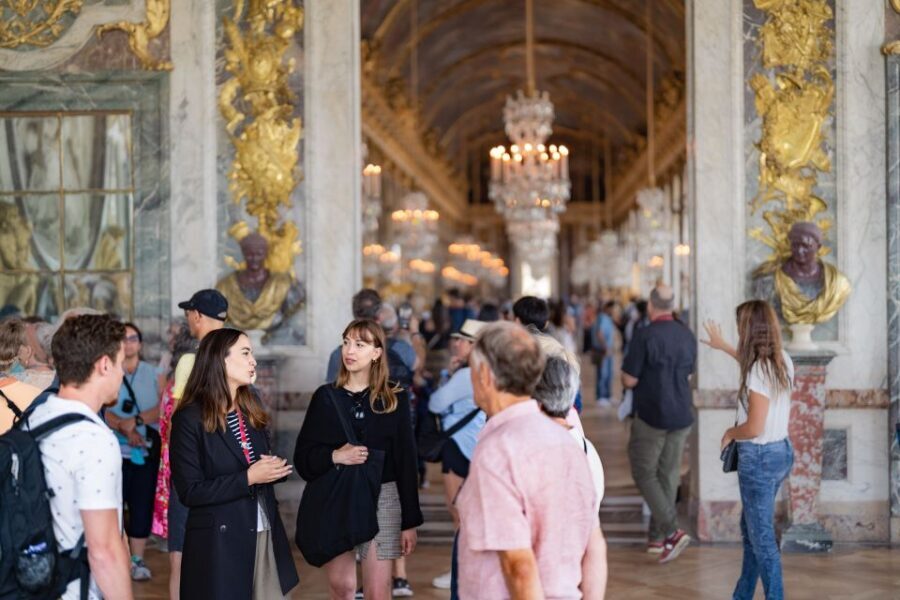
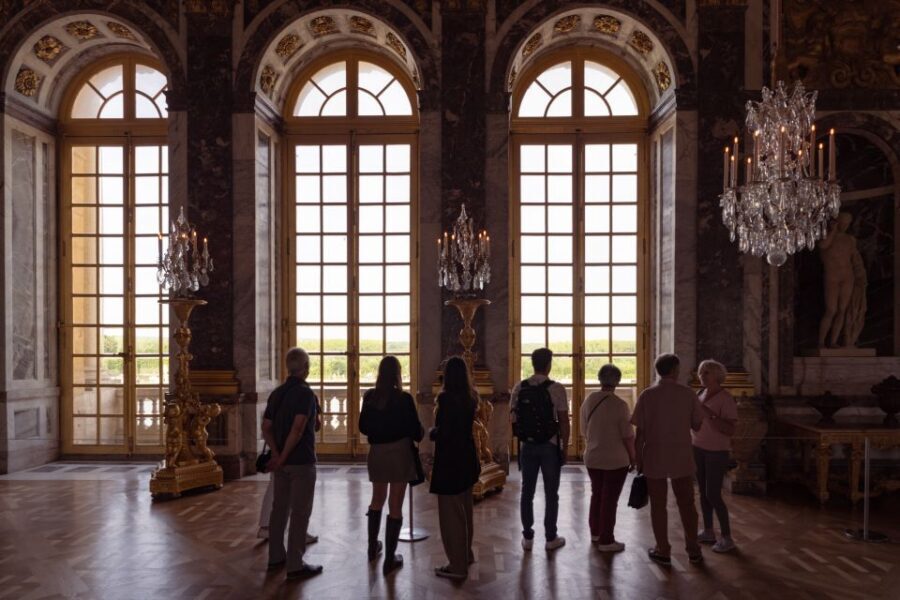
If you love architecture and status symbols, the Palace is your payoff. The Hall of Mirrors is the headline, but it works best when you understand why mirrors mattered and how the palace was designed to broadcast power.
Here’s what to look for as your guide moves you through:
- The visual trick of the mirrors: they’re not just pretty. They multiply light and create that staged, theatrical feeling Versailles is famous for.
- How the royal apartments are framed: you’ll hear about personalities, court life, and how the setting functioned as a tool of rule.
- Why the layout repeats a theme: symmetry, ceremony, and control. It’s one of those places where the design tells you what kind of world this was.
A practical tip: wear layers you can handle. Even with a guide, you’ll be standing in busy rooms, and Palace air can swing from cool to stuffy. If you’re used to museum hopping, this will still feel like a commitment—because Versailles is both grand and dense.
Gardens, fountains, and musical shows: timing is everything
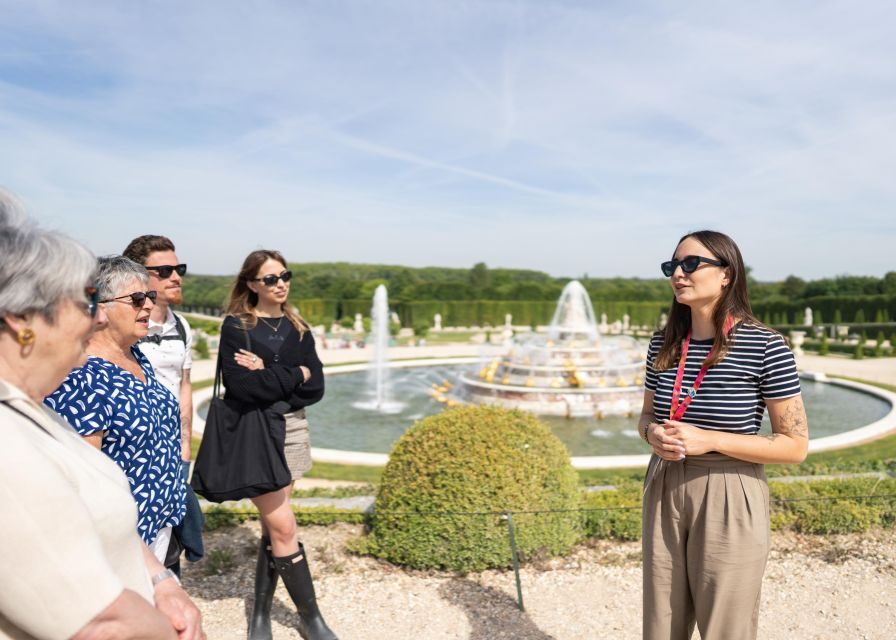
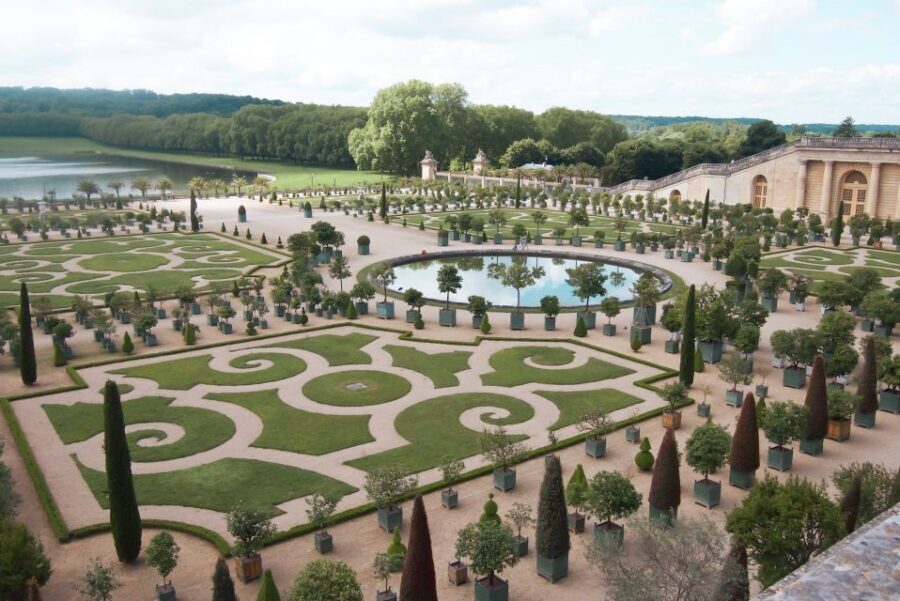
The gardens are where Versailles becomes its own experience. After the palace portion, you get a guided gardens tour of about 1 hour, plus a break for lunch later that gives you time to reset and wander more on your own.
Now for the schedule reality. From April 1 to October 31, the gardens run special seasonal programs:
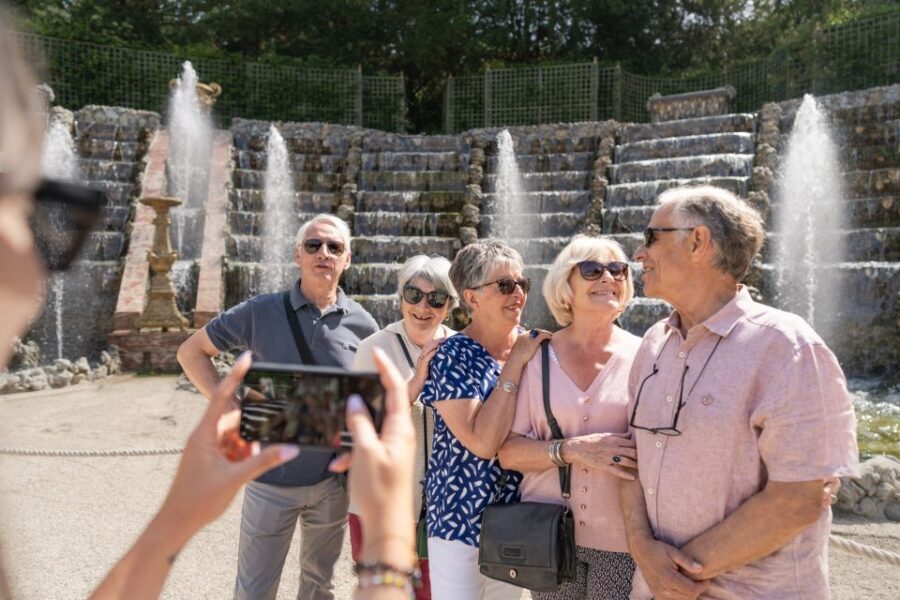
- Fountain shows take place on Saturdays and Sundays, plus Tuesdays in May and June, and on national holidays.
- Musical Gardens happen on other days in that period, with music played throughout the groves.
Two important details you should keep in your head:
- Fountains don’t run continuously. They follow set times.
- Your best viewing depends on your day-of schedule, not just the season.
When fountains are active, you get that famous effect—long water lines, jets, and the sense that the whole park is choreographed. When they’re not, the Musical Gardens version still gives you atmosphere, especially if you like hearing the court-life vibe translated into sound and space.
Also, the gardens were the stage for performances and pyrotechnics back when Versailles was the center of European power. Your guide’s job is to connect the pathways and vistas to the kinds of events that used to happen here, so you see more than just pretty lawns.
Marie Antoinette’s Petit Trianon and the Normandy village
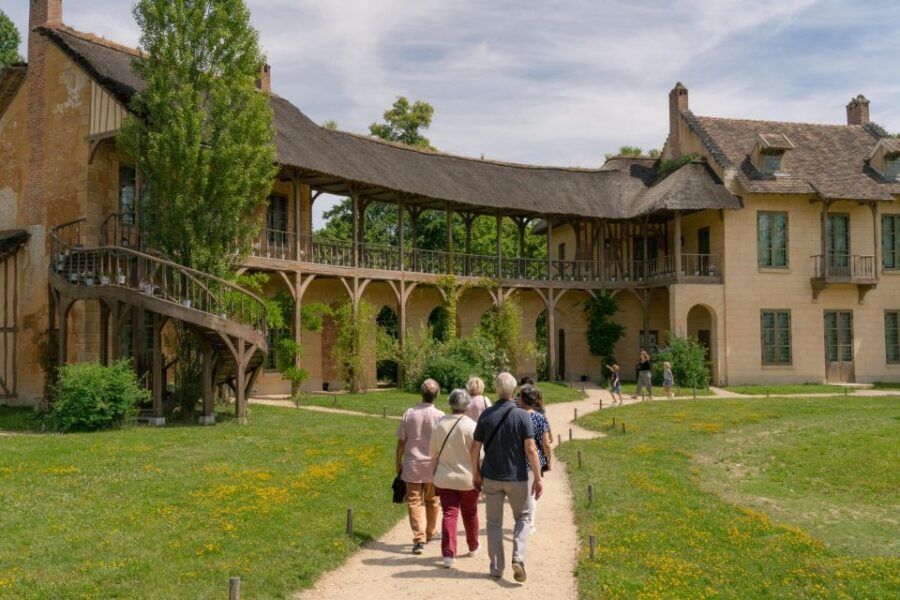
The afternoon is the part many people remember most—because Marie Antoinette’s story is more personal than court-pageantry.
You’ll visit her private domain for about a three-hour excursion that includes Petit Trianon and the queen’s Normandy village. This side of Versailles is designed to feel like a break from the public palace. The idea was country life: not poverty, but simplicity as theater—complete with a vineyard, a dairy, and a vegetable farm.
Petit Trianon itself is the star, and the tour keeps you moving through the key spaces with a guide (the on-the-ground portion of the Petit Trianon visit is about 1 hour in the outlined schedule). One practical win: you don’t have to walk the entire distance between major points. The Petit Train reduces walking between the Palace area and the Petit Trianon domain.
That small transport detail changes the day. Versailles is already physical; cutting a chunk of distance helps you actually enjoy the estate instead of counting steps.
A note on Marie Antoinette’s angle: the tour frames her discomfort with the public palace and her preference for private space. That’s useful context. If you arrive expecting only portraits and romance, you’ll miss the tension. If you arrive ready for a story about power versus comfort, you’ll get more out of every room and path.
Other full-day Versailles tours we've reviewed






Lunch planning at Versailles: use the break wisely
Lunch is where the pacing gets real. After the morning palace and gardens blocks, you get about an hour break. Lunch isn’t included, and you’ll choose from restaurants and sandwich bars in the area.
If you want a bigger splurge, there’s an optional gourmet three-course lunch with wine at the Palace restaurant run by Chef Ducasse. This is the kind of add-on that makes sense only if you truly want the full Versailles experience, not just the sites.
My practical advice: treat lunch as a reset button. You’ll have walked a lot by then, and Versailles has a way of stacking fatigue fast. Eat something filling, drink water, and give yourself a few minutes to regroup before you head back into the gardens and Petit Trianon area.
The behind-the-scenes extras that make the day smoother
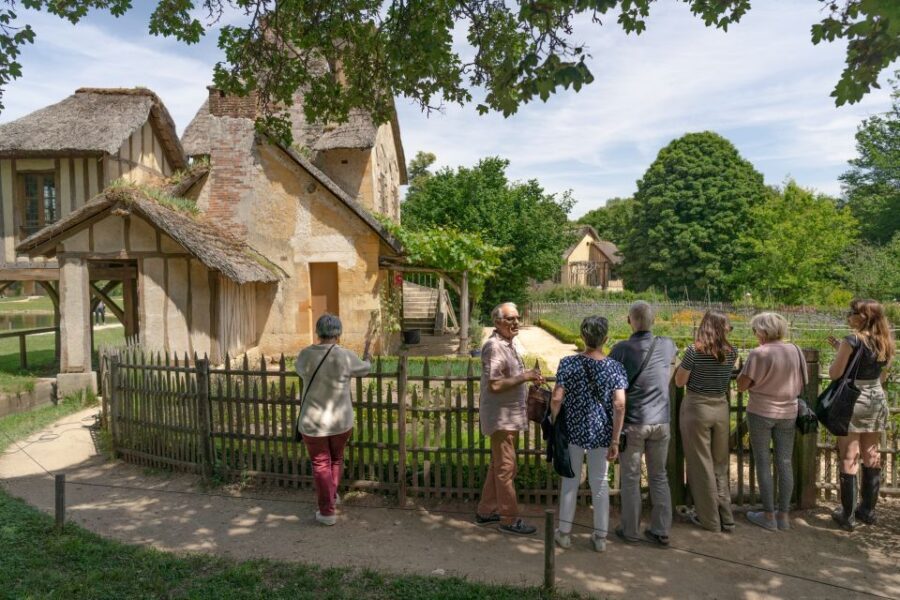
Several details are doing quiet work for you here:
- Professional English-speaking guide: you’re not just reading plaques. You get a spoken narrative that connects rooms, politics, and daily life.
- Headsets when necessary: this is underrated. In crowded spaces, it’s the difference between hearing the guide or guessing.
- Skip-the-line entry: even a good day can be ruined by waiting. This tour builds the day around pre-booked access.
- Comfort-focused transport: the train ride to and from downtown Paris keeps it relatively straightforward compared with the chaos of timing a car or lining up shuttle options.
- Petit Train included: it’s listed as part of the domain experience, specifically to cut down walking between areas.
From the feedback, the guide quality seems to be a major driver of satisfaction. People praised guides for humor, strong stories, and good pacing—examples included Ed, Oliver, Marion, Hervé, and Quentin in different named comments. While no guide is identical, the format clearly targets a lively, structured tour rather than a slow wander.
Walking, heat, and comfort: how to prepare for a 9-hour commitment
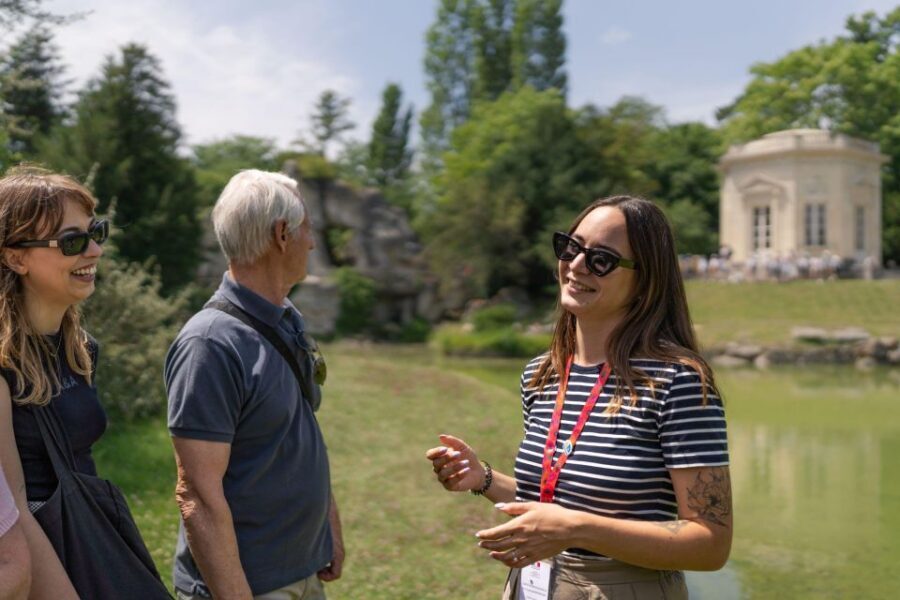
This is a full-day Versailles plan—about 9 hours. That isn’t a typo. You’re moving from palace to gardens to the queen’s domain and back through additional palace time.
The tour requires a significant amount of walking, so your shoes matter more than your outfit. You’ll also spend time outdoors in the gardens, which is where weather can hit hardest.
Also, this trip isn’t suitable for wheelchair users. If mobility is a concern, that matters as a hard constraint, not a minor inconvenience.
If you want the best experience, go practical:
- comfortable, supportive shoes
- water on hand
- a hat and sunscreen in warmer months
- a light layer you can handle indoors
Price and value: what you’re paying for at $180 per person
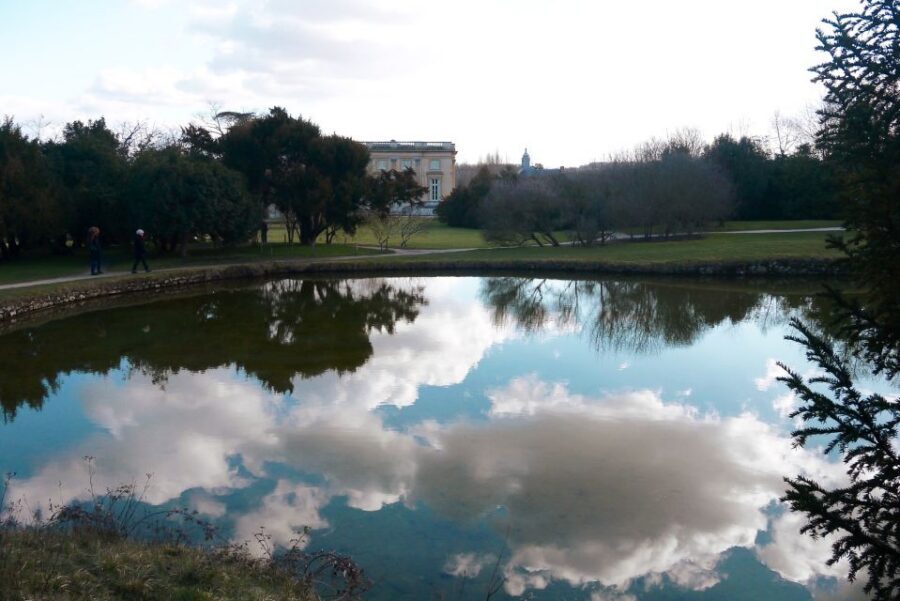
At $180 per person, this isn’t the cheapest way to see Versailles. But you’re not just buying entry tickets.
You’re paying for:
- Guided time across the Palace and gardens, plus the Petit Trianon area
- skip-the-line access that saves time during peak congestion
- escorted round-trip transportation by train from downtown Paris
- headsets for clearer audio in crowded rooms
- Petit Train ride between key areas
So the value math is mostly about time and hassle. If you’re the kind of traveler who wants to see Versailles without turning it into an all-day navigation puzzle, this format starts to make sense. You trade flexibility for structure, and Versailles rewards structured attention.
If you already know exactly what you want to see, and you’re comfortable building your own palace-and-gardens route, the tour may feel pricier than necessary. But for first-timers, the built-in guidance tends to justify the cost.
Should you book this Versailles full-day train tour?
Yes—if you want a guided day that keeps you moving in the right order. I’d book this if:
- you care about understanding what you’re seeing at Versailles, not just photographing it
- you want skip-the-line entry and help with the day’s route
- you want Marie Antoinette’s Petit Trianon and the Normandy village with reduced walking via the Petit Train
- you like the idea of gardens with Musical Gardens or fountain shows during the season window
I’d pause and think twice if:
- you’re sensitive to long walking
- you need a very relaxed pace with lots of free time
- you’re hoping to catch constant fountains all day (the schedule is set)
If you fall in the first group, this is one of the smarter ways to do Versailles in a single day from Paris without losing hours to logistics.
FAQ
How long is the Versailles full-day trip from Paris?
The tour lasts about 9 hours.
How do you get from Paris to Versailles?
You ride an escorted train from downtown Paris to Versailles. The train ride is about 40 minutes each way.
Is skip-the-line entry included?
Yes. Entrance fees and skip-the-line entry to the Palace are included.
What parts of Versailles are included in the tour?
You’ll tour the Palace of Versailles, the gardens, and Marie Antoinette’s private domain at Petit Trianon (including the queen’s Normandy village).
Is lunch included?
Lunch is not included. There is a lunch break in the gardens where you can buy food, and an optional gourmet lunch add-on is available.
Are fountains and musical shows included?
The gardens run seasonal fountain shows and Musical Gardens during the period from April 1 to October 31, depending on the day and schedule. Fountains run on set times, not continuously.
Does the tour include the Petit Train?
Yes. You ride the Petit Train to and from the Petit Trianon area to reduce walking.
Is the tour wheelchair accessible?
No. It is not suitable for wheelchair users.