REVIEW · PARIS
Versailles Revolution Tour – 1789
Book on GetYourGuide →Operated by Baptiste Barennes · Bookable on GetYourGuide
Revolution didn’t happen in a textbook. This interactive walk in 1789 links Versailles streets to the General Estates and big ideas like the Declaration of the Rights of Man and Citizen, plus you stop along the route tied to Marie Antoinette and Louis XVI. The only real catch: there’s no access to the castle of Versailles, so it’s about the town and key sites nearby, not the palace rooms.
What I like most is how the 2-hour format keeps momentum, and how the guide brings the story alive scene by scene instead of rushing you point-to-point. You start at the equestrian Louis XIV statue in front of the castle, then you’re walking through Versailles as if you’re a deputy heading into history.
In This Review
- Key reasons this Versailles 1789 walk works
- Versailles Revolution Tour – 1789: what you’re really signing up for
- Timing and starting point: use the “easy to find” advantage
- The 1789 story in one walk: stop-by-stop breakdown
- Arms Square: the opening of the Estates-General
- Hôtel des Menus-Plaisirs: where revolutionary change begins nearby
- Royal Tennis Court: the Tennis Court Oath (June 20)
- Hôtel de Madame du Barry: Louis XV’s favorite as a closing act
- Paris Avenue: the route of the women arriving
- Former Foreign Affairs Hotel: the treaty ending American Independence
- The tour experience: guided, interactive, and built for questions
- What you’ll learn beyond names and dates
- Price and value: $41 for a 2-hour “story walk”
- Who should book this (and who might skip it)
- Practical tips for making the most of the walk
- Should you book the Versailles Revolution Tour – 1789?
- FAQ
- Where is the meeting point?
- How long is the tour?
- How much does it cost?
- Is this tour inside the palace of Versailles?
- What languages are available?
- Is the tour wheelchair accessible?
- What is included in the price?
- Is there a cancellation window?
Key reasons this Versailles 1789 walk works
- Estates-General route: You trace the opening of the Estates at Arms Square and the revolution’s early sparks nearby.
- June 20 tennis oath stop: The Royal Tennis Court helps make the revolution feel urgent, not distant.
- Revolution + America connection: You connect Versailles politics to American Independence, Lafayette, and the war-ending treaty site.
- From Louis XVI to Marie Antoinette: Major figures aren’t just names; they’re tied to locations you can stand in front of.
- A guide-led, story-driven pace: The best value is the explanations that help you picture what each place meant.
- You get something tangible: At the end you receive a reproduction of an engraving/map of Versailles.
Versailles Revolution Tour – 1789: what you’re really signing up for
The Versailles Revolution Tour – 1789 is a guided walk through Versailles town, not a palace tour. It’s built around the moment the French Revolution snaps into motion in 1789, with the guide placing you “on the footsteps” of people tied to that era—deputies, royal figures, and the political world that stretched beyond France.
This is also a tour for people who like history with a pulse. You’ll be shown where events happened, then you’ll be asked (quietly, in conversation) to connect those dots: why the Estates mattered, how public ideas spread, and why Versailles isn’t just a backdrop for gardens and mirrors.
The format is straightforward: a 2-hour guided experience with English or French narration. You’ll see multiple key sites in the area close to the castle, and you’ll return to the same place you started.
If you're still narrowing it down, here are other tours in Paris we've reviewed.



Timing and starting point: use the “easy to find” advantage
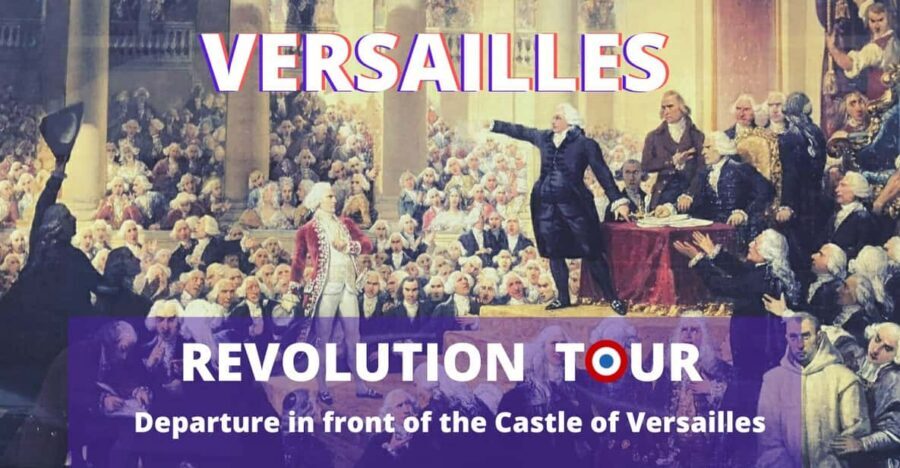
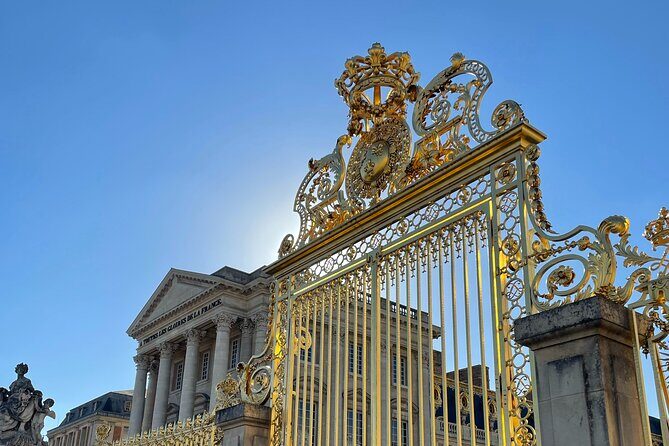
You meet at the equestrian statue of Louis XIV, in front of the castle of Versailles. That matters more than it sounds. Versailles can feel like a maze on your first visit, and this meeting point gives you a clean anchor.
Plan on staying close. The tour takes place in the town of Versailles near the castle, and there’s no castle entry. So you’re not waiting in palace lines, and you’re not losing time swapping indoor logistics for outdoor walking.
At 2 hours, you get time to understand the story without feeling stuck out there all day. It’s a good “mid-trip” activity if you already plan to see the palace later on your own, or if you want Versailles without committing to a full day.
The 1789 story in one walk: stop-by-stop breakdown
Here’s the backbone of what you’ll cover, and why each stop earns its place on the route.
Arms Square: the opening of the Estates-General
You begin with Arms Square, the setting for the procession tied to the opening of the General Estates in May 1789. This is where your tour helps you understand the Revolution as a system of institutions failing in real time—not just a dramatic moment.
The guide’s job here is to make the Estates feel immediate: who was there, what each group wanted, and why that gathering turned into a pressure cooker. You’ll get context for the political energy that later becomes street action and new political language.
Hôtel des Menus-Plaisirs: where revolutionary change begins nearby
Next comes Hôtel des Menus-Plaisirs. This stop is framed as a place where the French Revolution began—an important pivot point on your timeline.
Even if you think you know 1789, I like this moment because it shifts the story from “court drama” to “public upheaval.” Versailles isn’t only about royals living elegantly. It’s also about structures, meeting rooms, and the kinds of decisions that reshape a country.
One nice touch: a participant previously noted getting access to a courtyard associated with the former Menus-Plaisirs area, which is exactly the kind of detail that makes a walking tour feel special compared with pass-by explanations.






Royal Tennis Court: the Tennis Court Oath (June 20)
Then you hit the Royal Tennis Court—home of the tennis court oath on June 20. This is the stop where the story tends to click.
The oath is powerful because it’s not only politics. It’s behavior. People choose defiance while everyone else watches and guesses what will happen next. Standing there helps you connect the words you’ve heard to the moment they were spoken.
If you’re visiting with teens, this is often the “wait, this is actually intense” moment. The tour isn’t a lecture; it’s a sequence of decisions.
Hôtel de Madame du Barry: Louis XV’s favorite as a closing act
After the oath, you’ll walk to Hôtel de Madame du Barry—linked to the last favorite of Louis XV. This placement matters. It helps you see how the old court world overlaps with the new political order forming right alongside it.
It’s also a reminder that by 1789, the royalty story isn’t one simple line. Court favor, power, and influence all had their own ecosystems—then the Revolution starts to smash those ecosystems.
Paris Avenue: the route of the women arriving
You’ll continue to Paris Avenue, a key point tied to the walk of the women arriving. This is where the tour moves from high politics to social pressure.
What I like about including this kind of route is that it keeps the Revolution from feeling like it only belonged to official buildings. People made demands. They traveled. They arrived. That’s the kind of information that helps you understand why 1789 escalated the way it did.
If you like learning by tracing paths, this part is for you. One participant specifically recommended taking this route and said it’s a strong way to imagine the day as events unfolded.
Former Foreign Affairs Hotel: the treaty ending American Independence
The final stretch links Versailles to the wider Atlantic world: the Former Foreign Affairs Hotel, tied to the Treaty of Versailles at the end of the American Independence War.
This is where you get a crucial “how did France get connected to America” bridge. You’ll hear the story with Lafayette, Marie Antoinette, and American Independence in the mix—so the Revolution in France doesn’t feel isolated.
It’s a smart choice for value: many Versailles tours treat America as a side note. This one uses the Versailles-to-America connection to show how political decisions in one place can echo across oceans.
The tour experience: guided, interactive, and built for questions
The tour is described as interactive. Practically, that means you’re not just standing and listening. The guide uses each stop to give context you can carry to the next location, and you’ll have room to ask questions in English or French.
The guide for this experience is Baptiste Barennes. Multiple bookings highlight his ability to make places feel discoverable, not prepackaged. One review noted that the explanations made it easy to imagine the events of 1789 so clearly that taking photos became an afterthought.
There’s also a “private tour” feel in some cases. In one instance, the tour ran for a solo pair with Baptiste. When the group is small, you can hear the details better, and you can ask the follow-up questions that make history feel real.
What you’ll learn beyond names and dates
The highlights are built around big ideas, but the real payoff is the sense of cause and effect.
You’ll get a clear line connecting:
- the political stage-setting of the General Estates
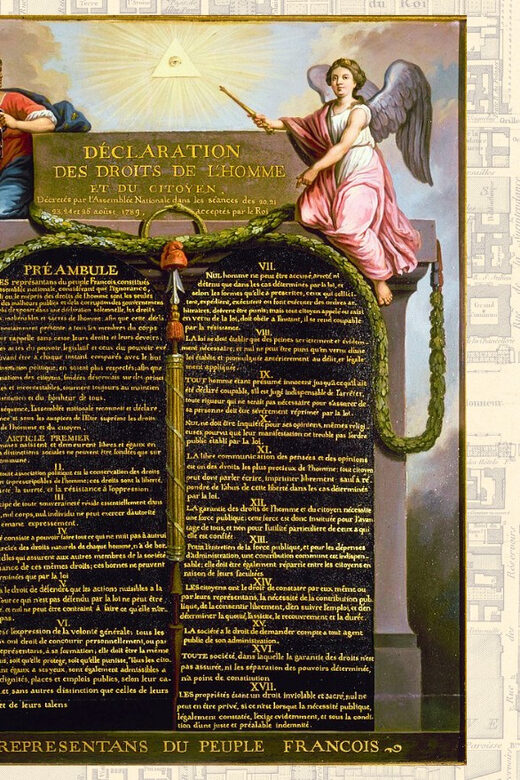
- the emergence of revolutionary language like the Declaration of the Rights of Man and the Citizen
- major royal figures like Louis XVI and Marie Antoinette
- the broader diplomatic world tied to American Independence
The best walking tours help you build a mental map. This one does that by moving through a sequence of meaningful locations—so your understanding doesn’t float around like facts in your phone. It lands in places you visited.
Price and value: $41 for a 2-hour “story walk”
At $41 per person for about 2 hours, you’re paying for more than footsteps. You’re paying for someone to translate the street-level sites into a coherent 1789 narrative.
That value is boosted by two included items:
- the guided tour itself, with a live guide (English or French)
- a reproduction of an engraving/map of Versailles at the end
If you’re comparing costs, this is also a useful option because it avoids castle entry. You’re not paying for a long indoor tour you might already be doing. You’re buying a different lens: the Revolution as experienced through the town and key nearby sites.
Who should book this (and who might skip it)
This tour is a great fit if you want:
- a revolution-focused take on Versailles, not a palace-first day
- a guided route that connects major events to specific places
- history with context that helps you understand why 1789 escalated
You might skip it if:
- you strongly want inside-the-castle time, because there’s no access to the castle of Versailles on this walk
- you prefer self-guided exploration without any set stops or guided commentary
Also, if you’re the type who enjoys role-playing the past a little, you may appreciate that at least one participant highlighted an energetic end discussion in the role of deputies. That kind of wrap-up is exactly what makes the Revolution feel less like a chapter and more like a live debate.
Practical tips for making the most of the walk
- Wear shoes you can walk in for two hours. This is a town route.
- If your French is basic, that’s fine. The guide offers English and French, and the story is structured around the places.
- Bring your curiosity. Ask how the “official events” connect to the public actions. The tour is built for those links.
- If you like souvenirs, be ready for the engraving reproduction. It’s a nice way to take the 1789 map idea home.
Should you book the Versailles Revolution Tour – 1789?
If you’re visiting Versailles and you want the Revolution side—General Estates, the Tennis Court Oath, and the Declaration of Rights—this tour is an easy yes. For $41 and two hours, you get a focused storyline that ties France’s 1789 crisis to the bigger world of American Independence.
I’d book it if you’re trying to understand Versailles as a political stage, not only a grand estate. I would skip it only if castle interior access is your top priority. Otherwise, this is a smart, human-scale way to see Versailles through 1789.
FAQ
Where is the meeting point?
You meet in front of the castle of Versailles at the equestrian statue of Louis XIV. The statue is described as large and there is only one.
How long is the tour?
The duration is 2 hours.
How much does it cost?
The price listed is $41 per person.
Is this tour inside the palace of Versailles?
No. The tour takes place in Versailles town close to the castle, and there is no access to the castle of Versailles.
What languages are available?
The live tour guide is available in English and French.
Is the tour wheelchair accessible?
Yes, the tour is wheelchair accessible.
What is included in the price?
The price includes the guided tour. At the end you also receive a reproduction of an engraving of Versailles (an old map redesign/other options).
Is there a cancellation window?
Yes. You can cancel up to 24 hours in advance for a full refund.
If you tell me when you’re going and whether you want English or French, I can help you fit this into a realistic Versailles day plan around the palace, too.